
Login
Log in if you have an account
Register
By creating an account with our store, you will be able to move through the checkout process faster, store multiple addresses, view and track your orders in your account, and more.
Create an accountHome Lighting Plan: Layers, Bulbs and Layouts That Work
Home Lighting Plan: Layers, Bulbs and Layouts That Work
A thoughtful home lighting plan is the fastest way to make rooms feel bigger, warmer and more functional. By layering ambient, task and accent light, choosing the right bulbs and mapping your layout on a floor plan, you’ll design spaces that look beautiful and work brilliantly every day.
Start with purpose and daylight
List what happens in each room and how you want it to feel. Reading, cooking, dining, gaming, focusing or unwinding all need different light. For each activity, decide the mood - cozy, crisp, dramatic - and the level of control you need with dimmers or scenes.
Next, map natural light. Note window orientation, bright spots, glare paths and dark corners. Plan to bounce daylight off pale walls, add sheers for diffusion, and place mirrors to pull light deeper into the room. Your artificial lighting should complement daylight by filling gaps at night and balancing contrast in the daytime.
The three layers of light
Combine these layers in every space. Most rooms need all three, on separate switches or smart scenes, so you can fine-tune from morning to night.
Ambient lighting - your base layer
Ambient light provides general illumination so you can move safely and see the room as a whole. Ceiling pendants, chandeliers, flush mounts and well-spaced recessed lights all work. Aim for even coverage without hotspots or cave-like corners. Use dimmers to soften evenings and raise levels for cleaning. Warm-white 2700-3000K is comfortable in living spaces.
Task lighting - focused where you work
Task lighting targets specific activities: under-cabinet strips for counters, pendants over kitchen islands, a desk lamp with a glare-free beam, bedside reading lights or a bathroom vanity with bright, shadow-free light. Keep the light in front of the task to avoid casting shadows and choose higher output with good color accuracy for tasks like cooking, makeup or craft work.
Accent lighting - add depth and drama
Accent light draws attention and shapes atmosphere. Use wall lights to wash texture, picture lights to highlight art, or a focused spot on a bookshelf or plant. Try a 3-to-1 contrast ratio - the accented area three times brighter than the room - for a gallery-like effect without glare. Small, dimmable sources let you sculpt the mood at night.
Bulbs that match the mood and task
Choosing the right light source is the engine of a great lighting plan for house or apartment. Focus on these specs and you’ll get predictable results every time. To choose sources and controls that fine-tune brightness and warmth across rooms, explore bulbs & accessories.
- Color temperature (Kelvin) - Warmer looks cozy, cooler looks crisp. 2700-3000K suits living areas, 3000-3500K for bathrooms, 3500-4000K for kitchens and desks.
- Brightness (lumens) - More lumens mean more light. Match output to task and room size rather than relying on watts.
- CRI 90+ - High Color Rendering Index keeps colors true on art, food and skin tones. Prefer CRI 90 or higher in kitchens, wardrobes and vanities.
- Beam angle - Narrow beams create highlights, wider beams spread light. Mix for depth.
- Dimming - Use dim-to-warm or warm-dimming LEDs for smooth, cozy evenings and brighter, neutral work light by day.
- IP rating - Bathrooms and outdoor zones need the right water protection. Check local code for safe zones around showers and tubs.
| Area | Purpose | Recommended K | Notes |
|---|---|---|---|
| Living room | Ambient + accent | 2700-3000K | Mix pendants, floor lamps, wall lights. CRI 90+ for art. |
| Kitchen - counters | Task | 3500-4000K | Under-cabinet strips or spots, shadow-free, CRI 90+. |
| Kitchen - island | Task + ambient | 3000-3500K | Cluster pendants at eye-comfort height, dimmable. |
| Bedroom | Ambient + reading | 2700K | Bedside task lights with switches within reach. |
| Bathroom - vanity | Task | 3000-3500K | Even face light at eye level, CRI 90+, suitable IP. |
| Desk | Task | 3500-4000K | Glare-free beam in front of work, high CRI. |
| Hallway | Ambient | 2700-3000K | Wall lights or ceiling lights for safe movement. |
Fixture types and smart placement
Recessed lights
Great for clean ceilings and targeted task light. In a kitchen recessed lighting plan, space downlights 1 to 1.5 meters apart and offset from cabinet doors to avoid shadows on counters. Use narrow beams for accents and wider beams for general light. Avoid gridding the whole ceiling in open spaces - mix with pendants and wall lights.
Ceiling pendants and chandeliers
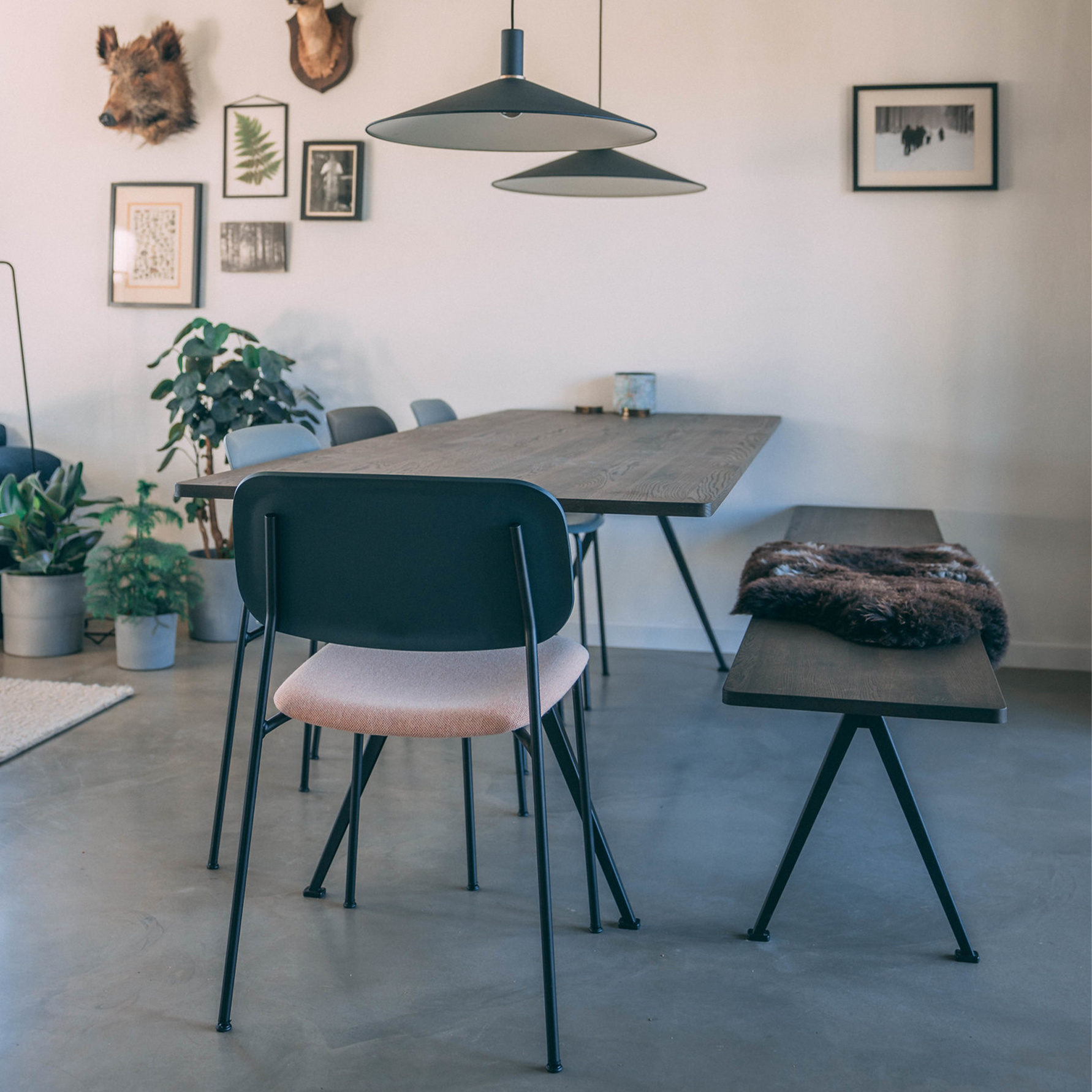
Perfect for ambient light and visual focal points. Hang dining pendants roughly 70-90 cm above the tabletop and place kitchen island pendants evenly across the length. Choose diffused shades for glare-free comfort and add dimmers for dinner-to-task flexibility.
Wall lights
Use wall lights to add vertical light and comfort in corridors, next to mirrors or above sideboards. They reduce harsh ceiling shadows and create depth. In hallways, stagger them at about eye level for an inviting rhythm along the route.
Floor and table lamps
Flexible layers you can move as furniture changes. A modern living room floor lamp can add soft ambient light; a focused table lamp boosts reading comfort. Plug into switched sockets where possible for easy scene control.
Room and layout tips
- Living room - Combine a ceiling light with wall lights and a couple of floor or table lamps. Add an accent on shelves or art to avoid flat light.
- Kitchen - Designer kitchen lighting blends bright task light on counters with dimmable island pendants and soft ambient light for evenings.
- Bedroom - Keep ambient warm and low. Add independent reading lights on both sides of the bed so one can read while the other sleeps.
- Bathroom - Light faces from the sides of the mirror, not just overhead. Use correct IP ratings near water.
- Hallway and stairs - Use wall lights or low-glare ceiling lights for safe, even illumination and a welcoming feel.
- Open plan kitchen - dining - living - Define zones with pendants, tracks or clusters, add a recessed lighting open floor plan grid only where needed and control each zone separately.
Plan your residential lighting layout
Turn ideas into a whole house lighting plan by sketching on your floor plan. Measure rooms, mark windows, doors, fireplaces and built-ins. Add furniture to see where tasks happen. Then layer:
- Ambient - rough in ceiling lights where you need general illumination.
- Task - place under-cabinet light, desk lamps, bedside lights and vanity lights where activities occur.
- Accent - mark art, shelves and architectural features for focused light.
Assign circuits and switching to each zone. Plan dimmers and scene control, and note socket locations - a clear floor plan lighting outlets layout saves headaches later. Specify bulb types, color temperature and CRI for each fixture in a simple schedule. For new builds or renovations, a residential lighting plan early in the process ensures cable routes and junction boxes land exactly where you need them. Smart systems - even a simple app or a Philips Hue planner - help you test scenes before buying. When mapping out your home lighting layers, start with the lighting overview.
FAQ about home lighting plans
How many recessed lights do I need in a room?
As a rule of thumb, start with one recessed downlight per 1.5 to 2 square meters for general light, then adjust for ceiling height, reflectance and task needs. Mix with pendants and wall lights for depth.
What color temperature is best for a living room?
Warm-white 2700-3000K feels cozy and natural at night. Keep accents dimmable and use CRI 90+ if you display art or rich materials to keep colors true.
How do I light an open concept home?
Create zones - kitchen, dining, lounge - and give each its own circuit or scene. Use pendants to define tables and islands, task light for counters and softer layers in the lounge, all dimmable.
What’s the difference between lumens and watts?
Watts measure power used, not brightness. Lumens measure light output. Compare lumens when choosing LEDs and match the output to the task and room size.
Bring your plan to life at Espoo
Explore Scandinavian design lights that make your plan sing. From Muuto pendants and HAY ceiling lights to Ferm Living wall lights and Pholc floor lamps, you’ll find the pieces to layer ambient, task and accent light beautifully. Shop online at espoo.be or visit our 400 m² Antwerp showroom to see finishes, scale and light quality up close.
Recent articles
View all
Coming soon...
Interior design service