
Login
Log in if you have an account
Register
By creating an account with our store, you will be able to move through the checkout process faster, store multiple addresses, view and track your orders in your account, and more.
Create an accountHAY vs Muuto dining chairs comparison
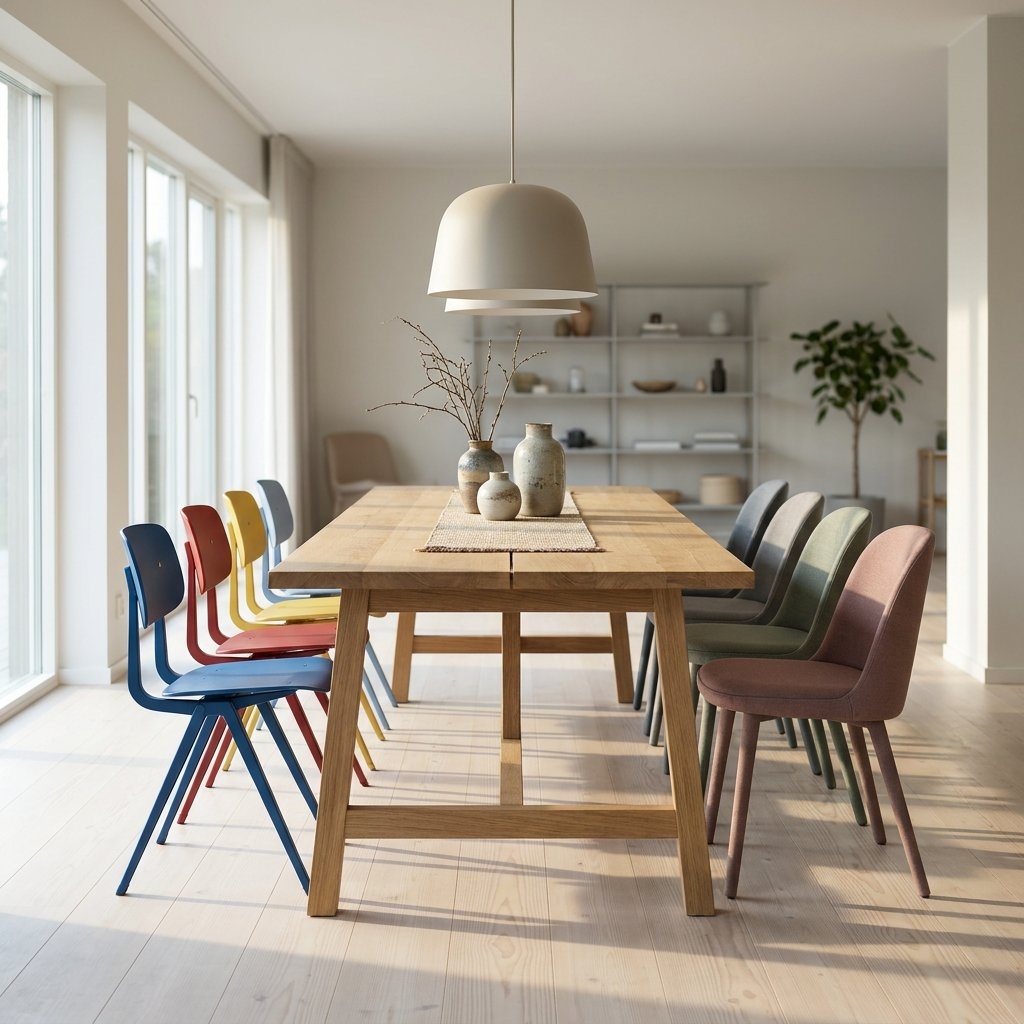
HAY vs Muuto dining chairs comparison
If you are choosing between HAY and Muuto dining chairs, the right option usually comes down to the look you want, the way you use your dining space, and how much visual softness or structure you prefer. Both brands sit firmly within contemporary Scandinavian design, but they express it differently. HAY often feels more graphic, playful, and architectural, while Muuto tends to lean softer, calmer, and more understated.
This comparison is designed to help you decide which brand is the better fit for your home or project. Rather than treating all dining chairs as interchangeable, it focuses on the differences that matter most when you are actually buying: design character, comfort, materials, and where each brand tends to work best.
The short answer
Choose HAY if you want a dining chair with a stronger visual statement, clearer lines, or an indoor-outdoor look that feels design-led and contemporary. Choose Muuto if you want a quieter chair that blends easily into a refined interior and prioritises a soft Scandinavian expression.
Neither brand is universally better. The better choice depends on whether your dining area needs more personality and contrast, or more warmth and restraint.
How HAY and Muuto differ in design style
The biggest difference is aesthetic direction. HAY dining chairs often feel a little more expressive. Shapes can be more graphic, silhouettes more recognisable, and the overall impression more design-forward. Within the HAY range, models such as the Balcony Chair, Crate dining chair, and Palissade dining seating show that the brand is comfortable moving between clean outdoor geometry and more characterful, architectural forms.
Muuto usually takes a quieter route. The brand is still modern, but often in a softer and less assertive way. Chairs such as the Linear Steel Side Chair and the Visu Chair reflect that balance well. The shapes feel more subtle, with a focus on calm proportions and a gentle Scandinavian simplicity that integrates easily into many interiors.
In practical terms:
- HAY suits interiors that want more edge, contrast, or visual identity.
- Muuto suits interiors that want cohesion, softness, and a more understated presence.
Comfort and everyday use
Comfort is not just about padding. With dining chairs, the key factors are back shape, seat support, posture, and how long you are likely to stay seated. Both HAY and Muuto offer chairs that are designed for everyday use, but they can feel different in use because of their forms and materials.
Muuto dining chairs often appeal to buyers who want a more relaxed visual and ergonomic feel. The softer language of the brand typically translates into chairs that feel easy to live with in calmer dining spaces, especially when the chair is used daily for meals, working from the table, or long evenings with guests.
HAY chairs can be very comfortable too, but the comfort experience is often more tied to the exact model. Some HAY designs prioritise silhouette and presence just as much as softness. That can be a strength if you want a chair that sharpens the look of the room, but it means you should look closely at the shape of the seat, the back support, and whether a matching cushion is available. For example, the Crate dining chair also has a matching seat cushion option, which can matter if you want a firmer design with extra comfort.
If comfort is your top priority, it is better to compare specific models than to assume one brand is always more comfortable than the other.
Materials and what they mean for your space
Material choice has a major effect on appearance, maintenance, and where the chair works best. In the confirmed ranges visible at Espoo, both brands include dining-chair relevant models, but with different expressions.
HAY includes outdoor-oriented options such as the Balcony Chair and Palissade seating, as well as the Crate dining chair. This makes HAY especially interesting if you want a consistent design language across indoor and outdoor areas, or if you are looking for a chair with a more architectural material presence.
Muuto includes examples such as the Linear Steel Side Chair and the Visu Chair, which point to two different directions within the brand: a more structured steel option and a more interior-focused chair expression. That makes Muuto attractive if you want Scandinavian restraint without the space feeling too severe.
As a simple rule:
- Steel or outdoor-focused designs tend to feel cleaner, more graphic, and often more architectural.
- Softer interior-oriented chair forms usually feel warmer and more natural in everyday dining rooms.
If you are asking which material is best for dining chairs, there is no single answer. The best material is the one that suits your setting, maintenance expectations, and desired atmosphere.
Which brand offers better value?
A better question than "is it worth the price?" is whether the chair gives you the right balance of design, usability, and longevity for your space. Both HAY and Muuto are premium design brands, so the value is not only in basic function. It is also in the quality of the design, the consistency of the collection, and how well the chair continues to work visually over time.
HAY often feels like strong value when you want a chair that visibly shapes the room. If the chair is part of the identity of the interior, a more recognisable design can justify the investment.
Muuto often feels like strong value when you want a chair that will remain easy to combine with changing tables, lighting, and accessories over the years. Its appeal is often in its quiet longevity rather than in immediate visual impact.
So the better value depends on what you are paying for:
- Choose HAY for value in statement and design character.
- Choose Muuto for value in subtlety and long-term versatility.
Best fit by room style
| Interior goal | Better fit | Why |
|---|---|---|
| A sharper, more graphic dining space | HAY | Often offers stronger silhouettes and more architectural presence. |
| A soft, calm Scandinavian dining room | Muuto | Tends to feel quieter, warmer, and easier to blend. |
| Coordinating indoor and outdoor seating language | HAY | Confirmed models include outdoor dining-chair options. |
| A subtle chair for a refined everyday interior | Muuto | Often works well where the overall room should feel cohesive rather than statement-driven. |
| A project that needs design impact | HAY | Useful when the furniture should contribute strongly to the visual identity of the space. |
| A project that needs calm flexibility | Muuto | Useful when the chair should support the architecture without dominating it. |
How to choose between HAY and Muuto dining chairs
If you are still deciding, these are the most useful questions to ask:
- Do you want the chair to stand out or blend in? HAY usually stands out more. Muuto usually blends more easily.
- Is the chair mainly for indoors, outdoors, or both visually? HAY has confirmed options that are clearly relevant for outdoor dining use.
- Do you prefer crisp structure or softer calm? HAY often feels crisper. Muuto often feels softer.
- Will the chairs define the room or support the rest of the furniture? If the chairs are a focal point, HAY may be the stronger choice. If they should support a balanced overall scheme, Muuto may suit better.
For many buyers, the final decision is less about the brand name and more about the exact chair in the exact room. That is why it helps to compare real models side by side and look at proportions, finish, and how the chair relates to your table and surrounding materials.
FAQ
Are HAY Rey chairs comfortable?
Comfort always depends on the exact chair shape and how long you plan to sit, but in general it is best to assess HAY model by model rather than making a brand-wide assumption. Some HAY chairs are more visually structured, so seat shape and back support matter more in the final choice.
Is Muuto furniture worth the price?
For buyers who value restrained Scandinavian design, visual longevity, and a refined everyday look, Muuto can offer strong value. The brand tends to appeal to people who want furniture that stays easy to combine over time rather than making the boldest statement in the room.
What dining chairs never go out of style?
Dining chairs with balanced proportions, clear materials, and a design that is neither overly decorative nor trend-led tend to stay relevant longest. That is one reason both HAY and Muuto remain attractive: each approaches contemporary Scandinavian design in a way that can still feel timeless when chosen well.
If you want to compare HAY and Muuto dining chairs more closely, seeing the proportions, finishes, and overall character in person usually makes the decision much easier. For a curated view across both brands, it helps to compare models in a showroom setting or alongside the rest of your dining interior. If you are also planning your table setup, a dining table size guide can help, especially if you are deciding how many people fit at a round dining table or how many people fit at an oval dining table.
Recent articles
View all
Coming soon...
Interior design service