
Login
Log in if you have an account
Register
By creating an account with our store, you will be able to move through the checkout process faster, store multiple addresses, view and track your orders in your account, and more.
Create an accountPrinciples of Scandinavian Interior Design
Scandinavian interior design principles
Calm, functional and welcoming - that is the promise of Scandinavian design. If you want a home that feels effortless yet thoughtfully composed, these principles help you make confident choices, from color and light to materials and furniture. As a Scandinavian design specialist in Antwerp, Espoo curates authentic pieces to bring the look to life. If you're new to the style, start with What is Scandinavian interior design?.
From philosophy to daily living: simplicity with purpose
Scandinavian interiors are guided by less but better. Every item earns its space by adding function, comfort or quiet beauty. Start by editing what you own, then plan storage that keeps surfaces clear so light, shape and texture can breathe. Choose clean-lined silhouettes, avoid visual noise and let negative space do some of the storytelling.
Make comfort intentional. A deep, structured sofa anchors the room without feeling heavy, while a single side chair can add sculptural interest. Materials should be honest and tactile, inviting everyday use. Keep decor restrained - a ceramic vase, a textured rug, a warm lamp - so the room reads calm at a glance and rewarding in detail up close.
The Scandinavian color framework
Build your palette around soft neutrals that amplify light. Off-whites, warm greys and gentle taupes create a quiet base that flatters natural textures and wood. Add depth with muted pastels or chalky blues and greens, then introduce small moments of contrast in black or charcoal through lighting, frames or hardware. The goal is balance - warm and cool tones working together without harsh shifts.
- Walls and large pieces: off-white, cream, light greige or pale sand
- Contrast accents: black, ink, deep brown in thin, graphic lines
- Soft color: dusty sage, muted clay, slate blue in textiles or art
- Finish: matte and eggshell over high gloss to keep reflections soft
For an outlook on how these choices evolve, explore Scandinavian interior design trends 2026.
Light as a design material
Daylight is central to the Scandi look. Keep window treatments sheer, extend curtain rods beyond the frame and use light, reflective wall colors. Layer evening light with three types - a warm ceiling glow, focused task lights and small pools of ambient light from floor or table lamps. Aim for warm white bulbs around 2700-3000K to maintain a cozy, human scale.
Honest materials and light woods
Natural materials ground the aesthetic and age gracefully. Light woods like birch, ash and oak set a bright, airy tone, while wool, linen and cotton add softness and breathability. Leather, stone and ceramic bring quiet richness. Prefer oiled, soaped or matte finishes over shiny lacquers so textures stay tactile and light diffuses gently. For more visual and material cues, see Scandinavian aesthetics.
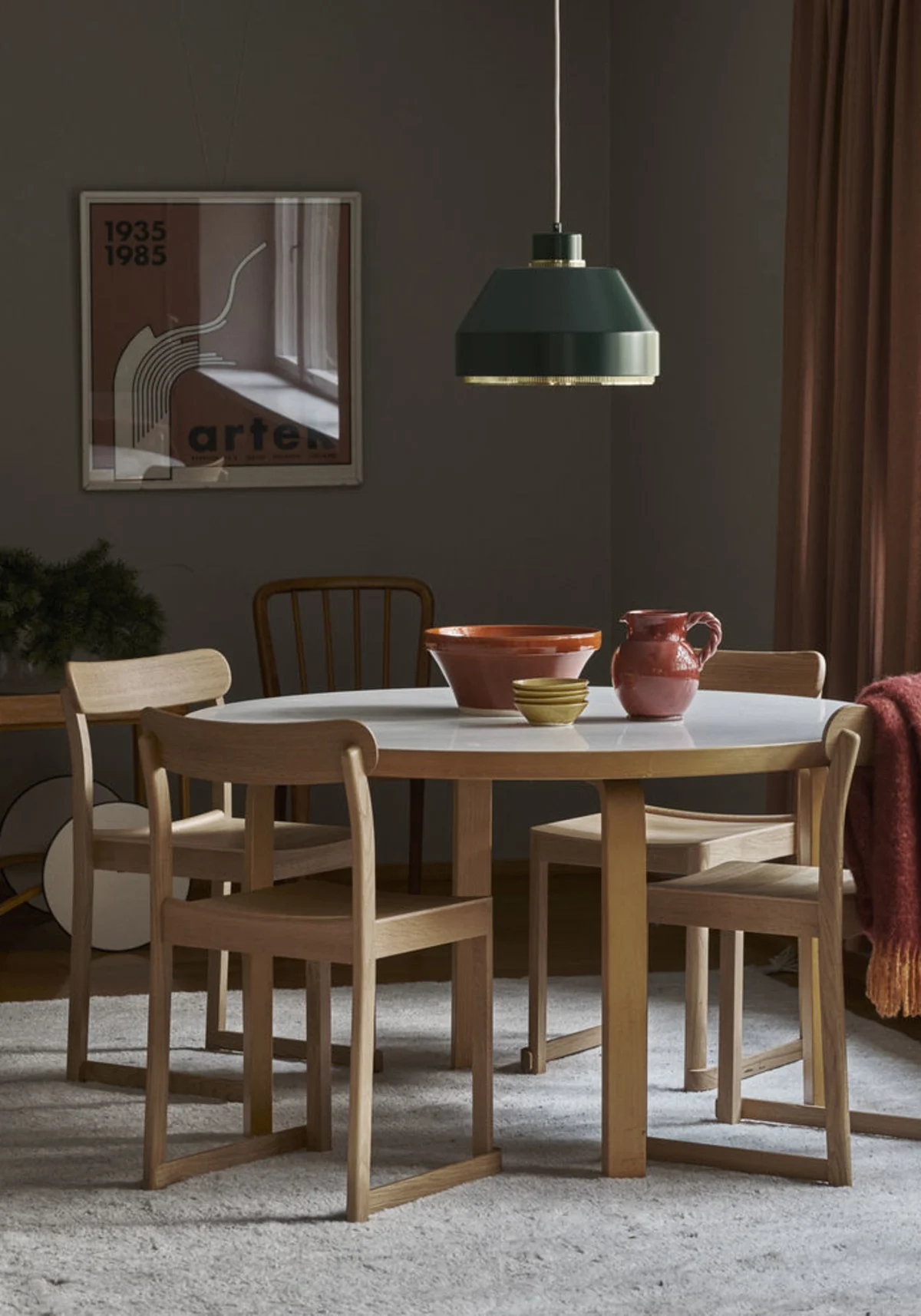
Let wood carry structure and warmth in key pieces. A timeless example is the round Aalto Table 90A by Artek, where natural birch and soft geometry make a room feel open and human centered.
Furniture that balances form and function
Choose pieces that feel visually light but deliver daily comfort. Low visual weight comes from raised legs, slim arms and rounded corners. Upholstery should be durable and soft to the touch, with removable or serviceable covers when possible. Prioritize a few strong anchors and avoid sets so the room feels collected, not staged. For the core principles behind material and craft choices, read What is Scandinavian furniture?.
Consider the deep, modern lines of the Rest Sofa by Muuto for a calm focal point, and add a tactile, bio-based piece like the Mat Chair by Normann Copenhagen to introduce sustainable texture without clutter.
Greenery and texture for warmth
Plants soften geometry and connect your interior to nature. Use a few larger specimens over many small pots to keep the scene calm. Layer textures through a wool rug, linen curtains and a knitted throw rather than heavy ornament. Candles and dimmable lamps add hygge - that felt sense of warmth and belonging - without visual overload.
Room-by-room quick wins
- Living room: anchor with a generous sofa, add one sculptural lounge chair, keep a single low table and a textured rug to gather the composition.
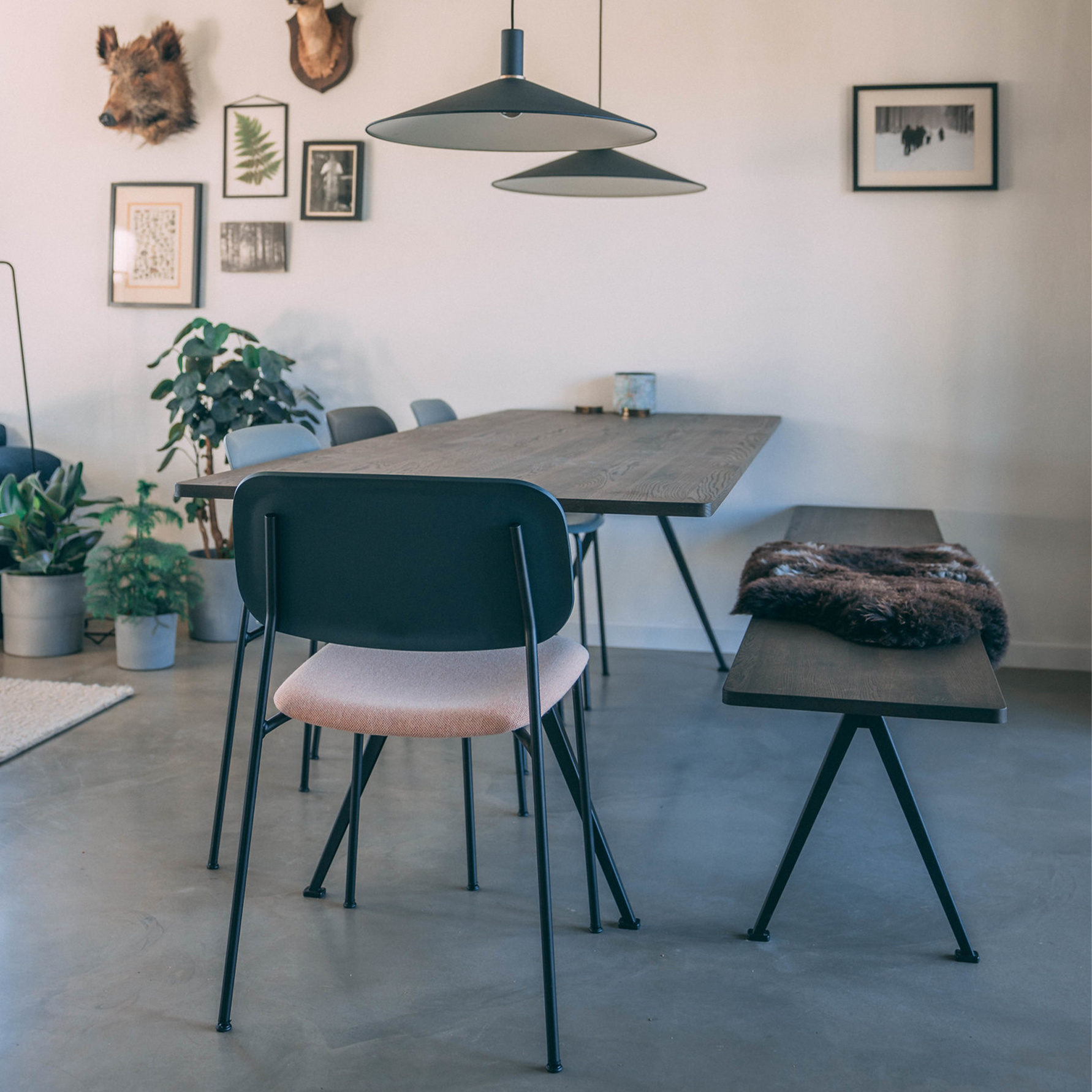
- Dining: choose a light wood table with curved edges, mix chairs for character, hang a warm, dimmable pendant at eye-friendly height.
- Kitchen: matte fronts, integrated pulls, open a single shelf for daily ceramics, keep counters clear with hidden bins and rails.
- Bedroom: low, padded bed, linen bedding in muted tones, blackout plus sheer layers, two warm bedside lights instead of a single bright one.
- Entry: slim bench, closed shoe storage, a tray or bowl for keys, one mirror to bounce light and expand space.
Scandinavian vs Japandi principles
Japandi blends Scandinavian warmth with Japanese wabi-sabi restraint. Both value simplicity, craftsmanship and natural materials. Scandinavian palettes skew lighter with airy woods and soft neutrals, while Japandi often adds deeper woods, inky contrasts and more pronounced negative space. If you prefer brighter, cozier rooms, lean Scandi; if you want meditative quiet with stronger contrasts, borrow from Japandi design principles.
Principle-to-product guide
| Principle | Actionable choice | Espoo suggestion |
|---|---|---|
| Less is more | Edit surfaces, choose one strong anchor | Rest Sofa by Muuto |
| Light wood | Use a pale, rounded dining table | Aalto Table 90A by Artek |
| Honest materials | Add a tactile, sustainable side chair | Mat Chair by Normann Copenhagen |
| Layered lighting | Combine pendant, floor and table lamps | Explore warm-toned Scandinavian lighting in-store |
Visit our Antwerp showroom or shop online to see how these pieces translate into your space, with advice tailored to your layout and lifestyle. For more curated pieces and inspiration, explore Scandinavian design.
FAQs
What is the 3-5-7 rule in interior design?
It is a styling guideline that groups objects in odd numbers for visual rhythm. Three items feel minimal and balanced in Scandi rooms, five builds a fuller vignette, seven risks clutter unless scaled carefully. Vary height, texture and negative space, and keep color within your palette so groupings read calm, not busy.
What are the rules of Scandi style?
- Simplicity first - fewer, better pieces
- Light palette with soft contrast
- Abundant natural light and warm lamps
- Natural, tactile materials and light woods
- Functional comfort with clear surfaces and hidden storage
- Small, meaningful decor over many accents
What is Scandinavian design theory?
Rooted in democratic design, it champions human-centered, accessible objects that improve daily life. Form follows function, materials are honest and crafted to last, and beauty emerges from restraint, proportion and light. Influences include Nordic nature, social progressivism and pioneers like Alvar Aalto who united architecture, furniture and everyday rituals.
Recent articles
View all
Coming soon...
Interior design service